The night the Building discovered her desire
The night the Building discovered her desire
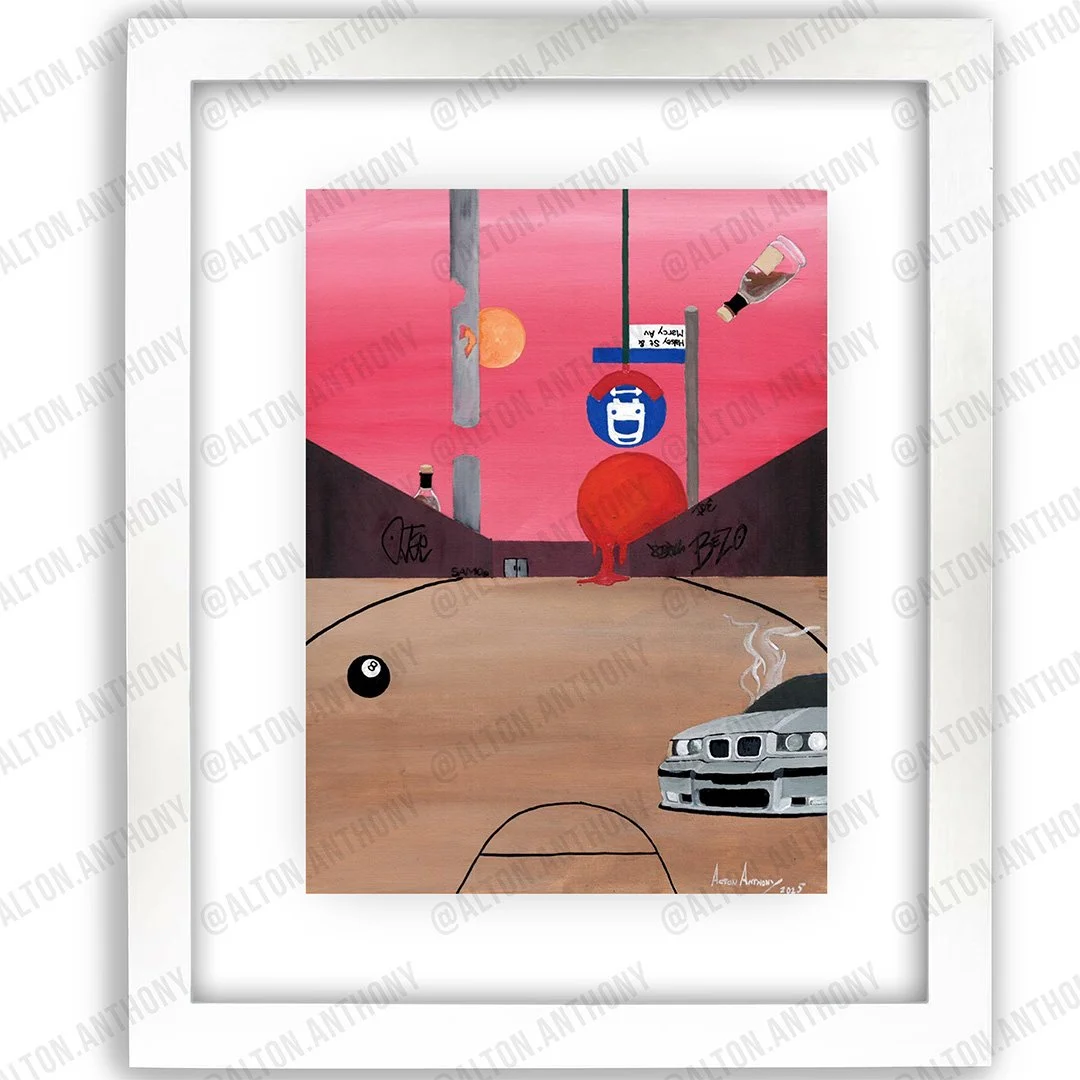
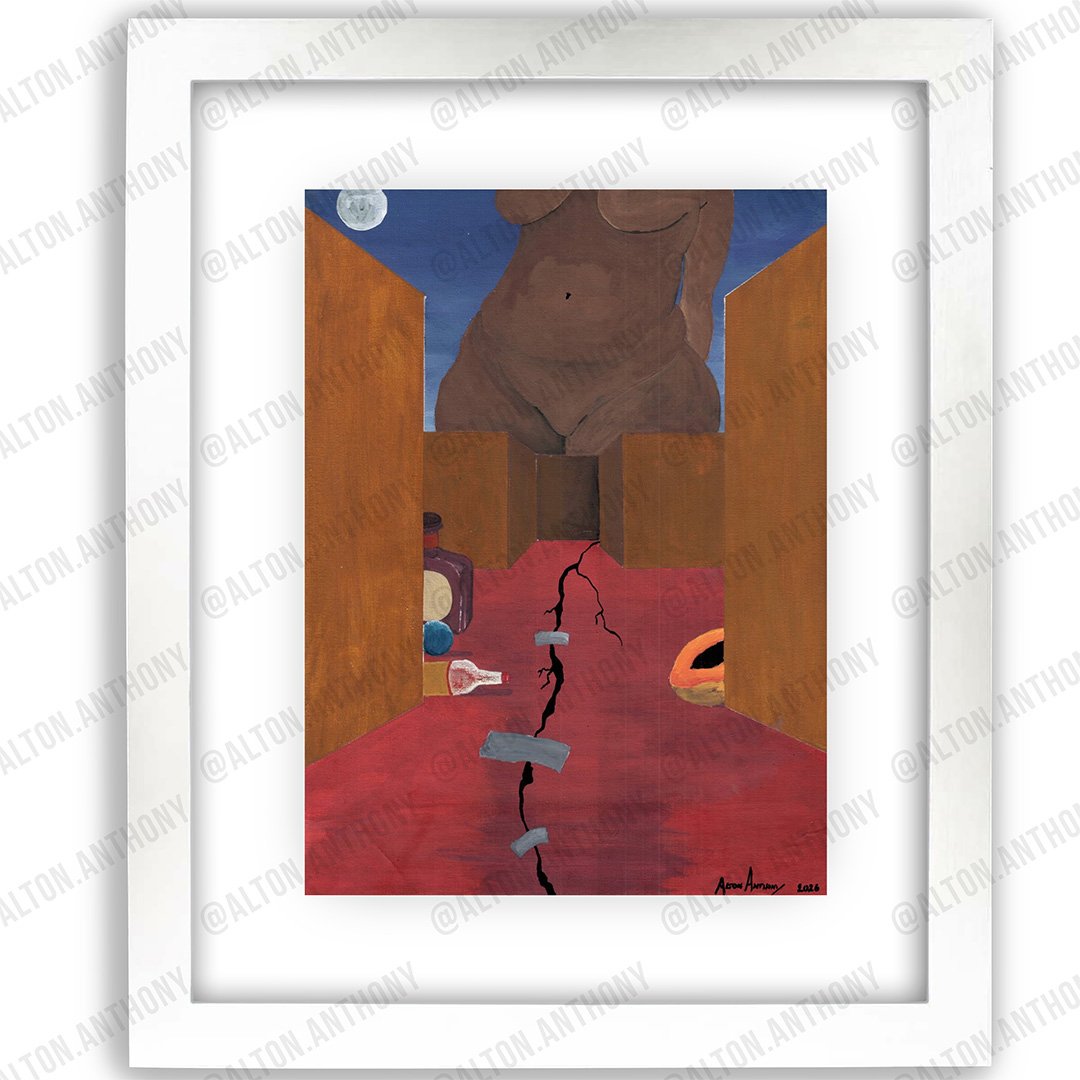
This piece plunges the viewer into an eclectic, dreamlike corridor where the boundaries between the organic and the architectural have completely collapsed. The composition is defined by a narrow, perspective-driven hallway constructed of massive flat walls. The floor beneath is a deep, blood-red carpet that stretches endlessly toward a vanishing point, suggesting a path that is both inviting and perilous. Dominating the background, piercing through the architectural frame like a god in a cage, is the colossal, disembodied torso of a nude female figure. Rendered in muted browns, she is massive and static, her features obscured by the sheer scale of the painting. She dwells amongst a bruised, twilight blue sky, with a pale, cratered moon hovering in the distance, witnessing the scene with cold detachment. In the foreground, the red floor is fractured by a jagged, black fissure that snakes toward the center of the composition, a wound in the world itself. This crack is held together with gray duct tape, as if the ground is being rebuilt by a clumsy hand. In the midst, a random assortment of discarded items sits in between the walls; a dark tequila bottle, a small blue sphere, and a broken vodka bottle lying on its side. These mundane objects of sustenance and vice, contrast sharply with the monumental scale of the figure above. They are relics of a life lived in this surreal space, perhaps indulging or abandoned. On the right, a partial orange shape, resembling a fruit, sits on the floor, offering a splash of warm color that clashes with the cool blue sky. The entire scene feels like a memory distorted by time, a dream where the rules of physics and proportion have been abandoned. The viewer is forced to confront the absurdity of a world where a human torso is as large as a building, and where the ground is cracked and broken, yet still walkable. This is a visceral exploration of the subconscious, where the body is both a landscape and a prisoner. It challenges the viewer to navigate the space between the mundane and the monumental, to find meaning in the cracks and the shadows. It is a painting that demands to be felt rather than understood. The work invites the viewer to step into the corridor, to walk the red path, and to ask: who is watching us, and what are we watching?